Call-for-Papers: Beyond the Neoliberal Order
Page Content
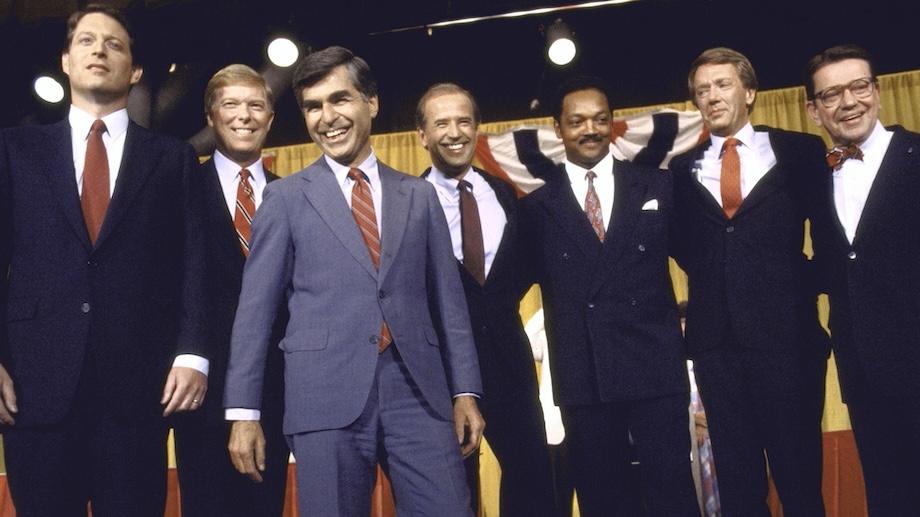
An October 2027 interdisciplinary conference in Columbia, MO, co-sponsored by the Kinder Institute and Ronald Reagan Presidential Foundation and Institute
It is commonplace to think of the history of the United States over the last five decades as an era of “neoliberalism”: a potent, tentacular ideology that transformed not only the U.S.’s economy, but its civic institutions, both major political parties, and even the souls of American citizens. According to the account popularized by historian Gary Gerstle, the “New Deal order” structured the political economy, public policy, and social contract of the U.S. between 1933 and 1980, before it gave way to a “neoliberal order” – amidst the decline of which we currently live.
Perhaps the neoliberal order is very real and still with us. But in recent years, U.S. historians have started to complicate this potent narrative, reimagining recent political history in the context of new threats to the order: the parallel populisms of the MAGA New Right and democratic socialist Left. Complex new interpretations are emerging that map the outer bounds of American politics during the supposed ascent of the neoliberal order between the 1970s and 1990s, probe the weaknesses and contradictions of that era’s apparent free-market consensus, and locate origins of the 21st-century populist counterrevolution in the fabled “end of history” decades earlier.
Beyond the Neoliberal Order: Reimagining the Recent History of the United States will convene scholars of both conservatism and liberalism who are at work crafting these new narratives. Cosponsored by the Kinder Institute on Constitutional Democracy (University of Missouri) and the Ronald Reagan Presidential Foundation and Institute, our conference seeks participants who study conservatism and liberalism broadly construed. We are interested in the development of political philosophies and ideas, party politics and movements outside of the formal political system, public policy and governance, and the economy. Participants will be researching the history of the U.S. since 1968, and we welcome scholars who engage with present-day politics, whether in academic or public-facing work.
The priority of Beyond the Neoliberal Order is to provide scholars of late 20th- and 21st -century politics with a forum to share, discuss, and refine new work that reimagines the narrative of free-market consensus and bring it into touch with present trends and realities. What alternatives were offered or practiced in response to the rise of the neoliberal order? What are some of the conventional interpretation’s blind spots and gaps? Before the mid-2010s, why did scholars of the neoliberal order fail to foresee the rise of today’s parallel populisms? The MAGA New Right at least benefitted from Tea Party voices crying in the pre-2016 wilderness; in contrast, the Left’s resurgence caught both politicians and scholars of U.S. politics by surprise. Are there alternative narratives and models that better account for these developments?
We invite participants from disciplines such as political science, economics, and sociology, as well as history, with the hope of generating wide-ranging, publicly engaged discussion that represents a diversity of intellectual perspectives. To propose a paper, please submit a one-page abstract, along with an academic CV, to the conference convener, Henry M. J. Tonks, Postdoctoral Fellow at the Reagan Institute at htonks@reaganfoundation.org, no later than February 22, 2027. For further information, please contact Henry Tonks; Jeffrey L. Pasley, Kinder Institute Chair in Early American History at the University of Missouri (pasleyj@missouri.edu); or Geoffrey M. Kabaservice, Vice President of Political Studies at the Niskanen Center (gkabaservice@niskanencenter.org). Use the link below to access the full call-for-papers.